The debate between custom keyboards and prebuilt gaming keyboards has grown significantly as more users demand better typing experiences, improved aesthetics, and enhanced performance. While prebuilt options dominate retail shelves with convenience and branding, custom-built alternatives attract enthusiasts who value personalization and precision. Both categories serve different types of users, and understanding their distinctions requires looking at design philosophy, performance features, and long-term usability rather than just price or appearance alone.
Design Philosophy and Flexibility
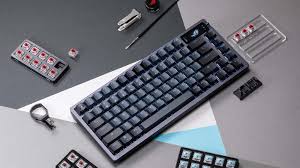
Prebuilt gaming keyboards are designed for mass appeal, often focusing on flashy RGB lighting, macro keys, and plug-and-play functionality. In contrast, custom keyboards emphasize modularity and user control, allowing individuals to select switches, keycaps, layouts, and even case materials. This flexibility enables users to craft a keyboard tailored to their typing style or gaming needs, something prebuilt options rarely achieve beyond superficial customization like lighting profiles or software tweaks.
Switch Technology and Innovation
One major area where differences stand out is switch technology. Traditional prebuilt gaming keyboards usually rely on standard mechanical switches or membrane hybrids. However, modern custom keyboards are pushing boundaries with innovations such as mixed switch systems. For instance, newer designs explore hybrids that combine mechanical feedback with magnetic actuation, offering adjustable actuation points and smoother keystrokes without sacrificing tactile response or speed.
Typing Experience and Feel
Typing feel is subjective, but it plays a crucial role in user satisfaction. Prebuilt keyboards often deliver consistent but generic feedback, designed to satisfy the widest possible audience. Meanwhile, custom keyboards allow users to fine-tune every detail—from switch lubrication to stabilizer tuning—resulting in a more refined and satisfying typing experience. Enthusiasts often describe this as smoother, quieter, and more responsive compared to stock gaming keyboards.
Build Quality and Materials
Prebuilt gaming keyboards vary in build quality depending on price, but many rely on plastic cases to reduce manufacturing costs. On the other hand, custom builds frequently incorporate premium materials like aluminum, brass plates, and high-quality PCB designs. These components not only enhance durability but also improve acoustics and typing stability. As a result, custom keyboards tend to feel more solid and long-lasting compared to many off-the-shelf gaming models.
Performance in Gaming Scenarios
Gaming performance is often cited as a reason to choose prebuilt keyboards, especially those marketed with ultra-fast response times and anti-ghosting features. However, modern custom keyboards can match or even exceed these capabilities, particularly when equipped with advanced PCBs and customizable firmware. Features like adjustable actuation and reduced latency are no longer exclusive to gaming brands, making custom builds increasingly viable for competitive gameplay.
Software and Customization Options
Prebuilt gaming keyboards usually come with proprietary software that allows users to control lighting, macros, and profiles. While convenient, these programs can be limited or resource-heavy. In contrast, custom keyboard users often rely on open-source firmware like QMK or VIA, which provide deeper control over key mapping and functionality. This level of customization enables users to create highly personalized layouts that go beyond what typical gaming software can offer.
Aesthetics and Personal Expression
Aesthetics play a significant role in keyboard choice. Prebuilt gaming keyboards often follow bold, aggressive designs aimed at gamers, with bright RGB effects and angular shapes. Meanwhile, custom keyboards cater to a broader range of styles, from minimalist and professional to artistic and colorful. Users can mix and match keycaps, cases, and lighting to reflect their personality, turning the keyboard into a centerpiece rather than just a peripheral.
Cost Considerations
Price is one of the biggest deciding factors. Prebuilt gaming keyboards are generally more affordable upfront, offering a complete package at a fixed cost. Custom builds, however, can become expensive depending on component choices. Despite the higher initial investment, many users view custom keyboards as a long-term asset due to their durability and upgrade potential. Instead of replacing the entire keyboard, individual parts can be swapped or improved over time.
Learning Curve and Accessibility
Prebuilt keyboards are straightforward—plug them in, install software if needed, and start using them immediately. Custom keyboards, however, require research, assembly, and sometimes troubleshooting. This learning curve can be intimidating for beginners, but it also adds to the appeal for enthusiasts who enjoy the building process. Resources and communities, including sites like monsgeek.com, help newcomers navigate the complexities and get started more easily.
Maintenance and Longevity
Maintenance differs significantly between the two options. Prebuilt keyboards are typically used until they wear out or malfunction, at which point replacement is common. Custom keyboards, by design, encourage maintenance and upgrades. Users can clean, repair, or replace individual components, extending the lifespan significantly. This modular approach makes custom keyboards more sustainable and adaptable compared to disposable prebuilt alternatives.
Sound Profile and Acoustics
Sound is an often-overlooked aspect of keyboard choice. Prebuilt gaming keyboards can be noisy or inconsistent in sound due to factory assembly methods. Custom builds allow users to control acoustics through case materials, foam layers, and switch modifications. This results in a more pleasing and controlled sound profile, whether the user prefers a soft thock or a crisp click, enhancing the overall typing experience.
Community and Enthusiast Culture
The rise of custom keyboards has been fueled by a passionate global community. Enthusiasts share builds, modifications, and innovations, creating a collaborative environment that continuously pushes the industry forward. Prebuilt gaming keyboards, while popular, do not foster the same level of community engagement. This cultural aspect makes custom keyboards more than just a tool—they become part of a hobby and creative outlet.
Which Option Is Right for You?
Choosing between custom and prebuilt keyboards ultimately depends on priorities. If convenience, affordability, and immediate usability are key, prebuilt gaming keyboards remain a strong choice. However, for those seeking personalization, superior build quality, and a tailored typing experience, custom keyboards offer unmatched advantages. The decision is less about which is objectively better and more about which aligns with the user’s preferences and willingness to invest time and effort.
Final Thoughts
As technology evolves, the gap between custom and prebuilt keyboards continues to narrow, especially with innovations blending different switch technologies and performance features. While prebuilt options remain accessible and practical, custom keyboards represent the future of personalized computing. They empower users to go beyond standard configurations and create something uniquely suited to their needs, redefining what a keyboard can truly be.

