In today’s competitive business environment, effective communication plays a vital role in building customer relationships and increasing sales. Customers expect quick responses, personalized conversations, and convenient ways to connect with businesses. This is where a CRM with WhatsApp integration becomes a powerful solution. By combining customer relationship management (CRM) features with WhatsApp messaging, businesses can simplify communication, improve customer experiences, and manage leads more efficiently.
Whether you run a small business, an e-commerce store, or a growing enterprise, integrating WhatsApp with your CRM system can help you connect with customers on a platform they already use every day.
What Is CRM with WhatsApp Integration?
A CRM with WhatsApp integration is a business solution that connects WhatsApp messaging with customer relationship management software. It allows businesses to communicate with customers, track conversations, organize contact information, and manage sales activities from a centralized platform.
Instead of switching between different applications, sales and support teams can access customer details and WhatsApp conversations in one place. Depending on the software, businesses can also automate notifications, assign conversations to team members, send follow-up messages, and monitor communication performance.
This integration makes customer interactions more organized while helping teams save time and deliver consistent service.
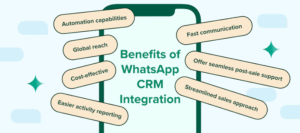
Key Benefits of CRM with WhatsApp Integration
1. Faster Customer Communication
Customers appreciate businesses that respond quickly to their questions. WhatsApp integration enables teams to manage incoming messages efficiently and respond without unnecessary delays. With shared inboxes and conversation assignments, multiple team members can handle customer inquiries more effectively.
Faster communication improves customer satisfaction and helps businesses build stronger relationships.
2. Better Lead Management
Managing leads manually can become challenging as a business grows. A CRM integrated with WhatsApp helps organize customer inquiries, store contact information, and track prospects throughout the sales journey.
Sales representatives can follow up with interested customers, record important conversations, and identify potential buyers who are ready to make a purchase. This structured approach reduces the chances of losing valuable leads.
3. Automated Follow-Ups and Notifications
Automation is another major advantage of using a CRM with WhatsApp integration. Businesses can configure automated messages for order confirmations, appointment reminders, payment updates, and other customer notifications.
Follow-up reminders also help sales teams stay connected with prospects at the right time. However, businesses should use automation responsibly and respect customer consent and messaging preferences.
4. Personalized Customer Experiences
Modern customers expect more than generic marketing messages. CRM software stores useful information, such as purchase history, previous interactions, preferences, and customer requirements.
When this information is available alongside WhatsApp conversations, teams can deliver more relevant recommendations and personalized support. This approach helps businesses make customers feel valued and understood.
5. Improved Team Collaboration
When customer conversations remain scattered across individual devices, important information can easily get lost. A centralized CRM platform allows authorized team members to access relevant conversation histories and customer records.
Managers can assign chats, monitor follow-ups, and maintain better coordination between sales, marketing, and customer support departments.
How Businesses Can Use WhatsApp CRM
A CRM with WhatsApp integration can support different business activities across multiple industries.
- E-commerce: Share order updates, delivery notifications, product information, and customer support messages.
- Real estate: Respond to property inquiries, schedule site visits, and follow up with interested buyers.
- Education: Answer admission questions, share course details, and send enrollment reminders.
- Healthcare: Manage appointment reminders and provide administrative updates while protecting sensitive patient information.
- Retail: Inform customers about product availability, promotions, and relevant offers.
These applications demonstrate how WhatsApp CRM can simplify communication while supporting daily business operations.
Tips for Choosing the Right WhatsApp CRM
Before selecting a solution, businesses should evaluate their communication requirements and growth plans. Look for features such as a shared team inbox, contact management, lead tracking, workflow automation, reporting, and integration with existing business tools.
It is also important to check data security, access controls, scalability, and compatibility with the official WhatsApp Business Platform. Review pricing carefully, including any applicable messaging or platform charges.
Choose software that is easy for your team to use and offers reliable customer support. Most importantly, ensure that the solution supports permission-based messaging and complies with applicable privacy requirements.
Conclusion
A CRM with WhatsApp integration can transform how businesses manage customer relationships, generate leads, and deliver support. By bringing conversations, customer information, and sales activities together, businesses can reduce manual work and create a more consistent customer experience.
From automated notifications to personalized communication, the right WhatsApp CRM can help organizations improve productivity and build lasting customer relationships. Investing in a suitable solution is a practical step toward creating a more connected, responsive, and customer-focused business.